Renewed partnership between UA and CNRS to study biodiversity in southern Africa
In early November 2025, the University of Angers renewed its partnership agreement with the CNRS for the IRL Rehabs project. We take stock with Olivier Pays-Volard, Director of BiodivAG.
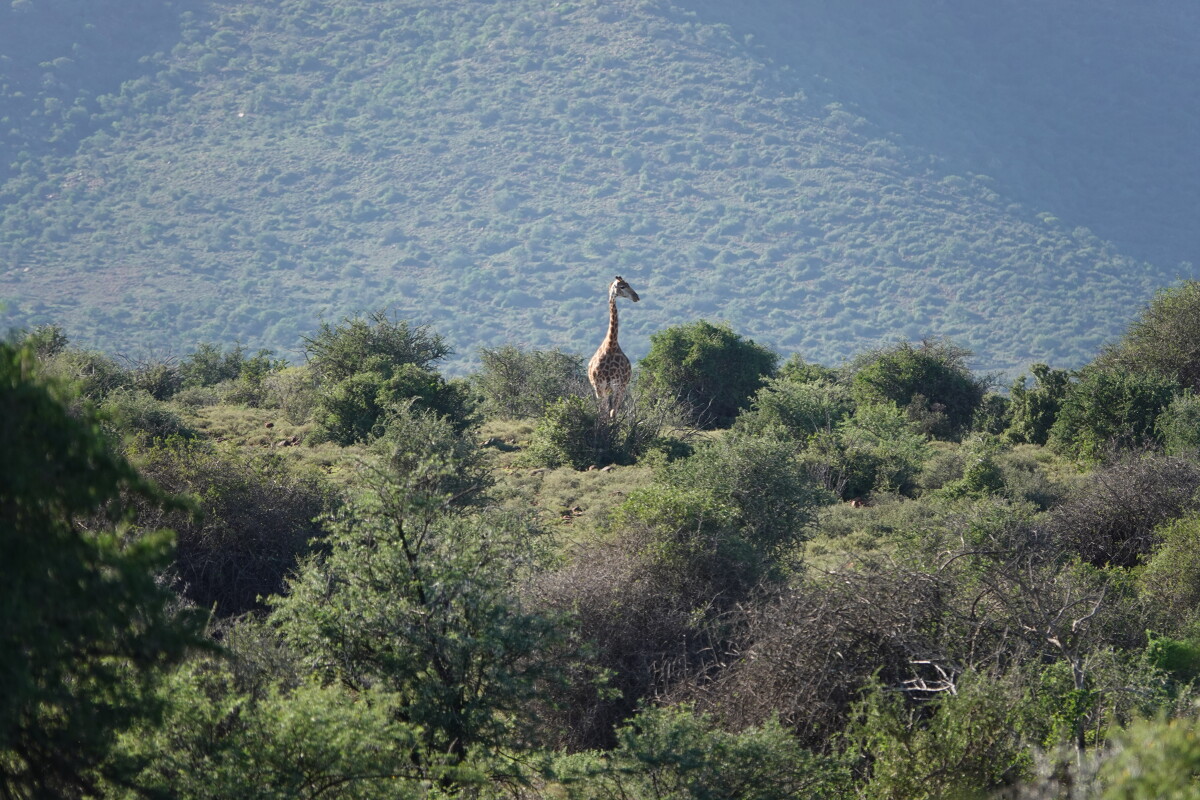
In the new agreement signed, the areas where land management is fully dedicated to the preservation of large mammals have been identified.
The International Research Laboratory (IRL) Rehabs (Reconciling Ecological Land and Human Adaptations for Biosphere Sustainability), launched in 2019 under the leadership of the CNRS and Claude Bernard University Lyon 1 and Nelson Mandela University (South Africa), in partnership with the University of Angers, aims to promote interdisciplinary research dedicated to understanding the socio-ecological mechanisms that ensure the sustainable functioning of ecosystems.
IRL presents a chance to investigate ecosystem-based solutions and pioneering adaptation strategies in the face of accelerated worldwide change in the Anthropocene.
Through this agreement, BiodivAG researchers have formed partnerships and initiated projects to study population trends of iconic large mammal communities in Africa's savannah protected areas over the past few decades. They have also proposed several factors that could explain the observed collapse of a large number of species.
Recognised research quality
On 7 November 2025, IRL Rehabs was renewed for five years, and a new agreement was signed between the University of Angers and the CNRS. "This is a crucial agreement for our team and for our continued participation in certified long-term biodiversity monitoring programmes in Africa," emphasises Olivier Pays-Volard. "It highlights how biodiversity, which is at the heart of our work at BiodivAG, is a vital issue for all societies. This agreement also recognises the quality of our research, which is fully in line with the major strategic orientations of research organisations. Finally, it complements the work we are doing on a more local scale in the Pays de la Loire region."
Three projects led by BiodivAG will be launched under this renewed agreement:
- A project dedicated to biodiversity dynamics in the Karoo region, a rapidly changing semi-arid area of South Africa where biodiversity is confronted with a variety of land management practices: traditional livestock farming, regenerative agriculture and conservation (Big Five reserves and hunting areas);
- Continued work on temporal trends in large wildlife in African protected areas, this time targeting new sub-regions;
- An emerging project on invasive alien species, another major issue in South Africa, aimed at strengthening collaboration between BiodivAG researchers and South African partners.
